 Newsverz
Science ·
Hubble scopre un misterioso schema meteorologico a dieci lati al polo sud di Saturno
Astronomi che utilizzano il telescopio spaziale Hubble hanno identificato un imponente schema atmosferico a dieci lati che circonda il polo sud di Saturno, largo circa 168.000 chilometri, segnando il primo grande getto a forma di poligono osservato nell'emisfero australe del pianeta.
Sintetizzato dall'IA a partire dalle fonti citate di seguito.
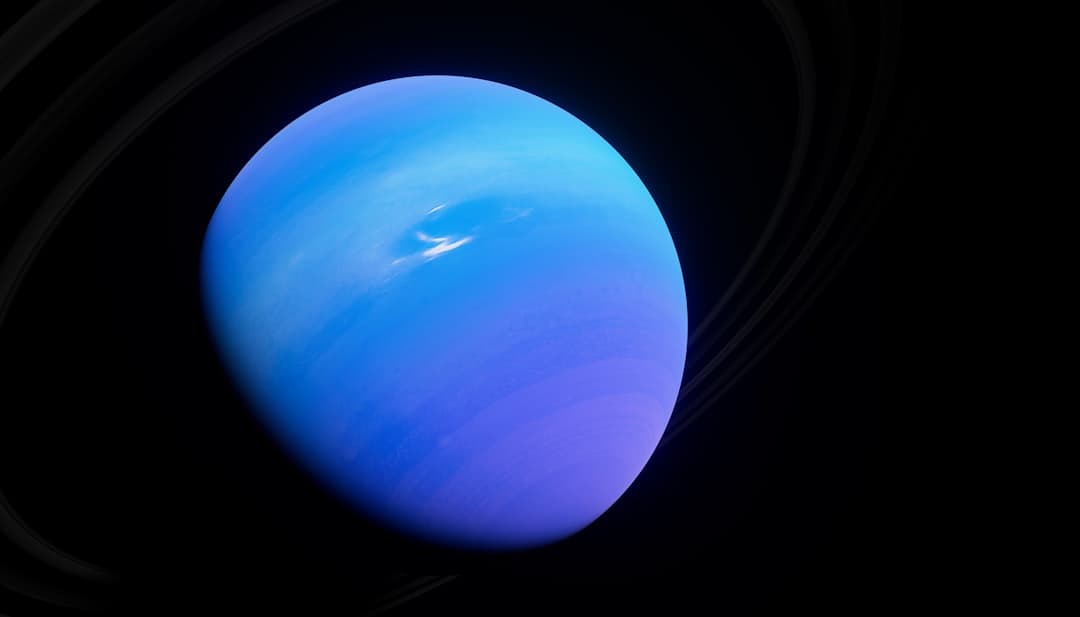
Astronomi che utilizzano il telescopio spaziale Hubble hanno scoperto un'imponente caratteristica atmosferica a dieci lati che circonda il polo sud di Saturno, estesa per circa 168.000 chilometri, ovvero circa 16.780 chilometri per lato, secondo risultati pubblicati sulla rivista Science Advances. Segna il primo grande schema di getto a forma di poligono osservato nell'emisfero australe di Saturno, una sorprendente controparte del famoso getto esagonale che circonda il polo nord del pianeta da decenni.
I ricercatori hanno affermato che il decagono sembra essere emerso gradualmente negli ultimi anni, sulla base di una revisione delle osservazioni di Hubble risalenti al 2023. Gli scienziati ritengono che questi schemi atmosferici poligonali si formino da complesse interazioni tra getti in rapido movimento a diverse latitudini, sebbene le dinamiche sottostanti che determinano il numero esatto di lati rimangano un'area di studio attiva. La scoperta si aggiunge a un quadro sempre più ricco dell'atmosfera di Saturno come una delle più dinamiche e geometricamente insolite del sistema solare.
Key facts
- Hubble discovered a ten-sided atmospheric pattern circling Saturn's south pole, about 104,250 miles across
- It is the first large polygon-shaped jet stream observed in Saturn's southern hemisphere
- It is a counterpart to Saturn's well-known hexagonal jet stream at the north pole
- The pattern appears to have gradually emerged over the past several years, based on Hubble data since 2023
- Findings were published in the journal Science Advances
Related articles
Science ·
NASA's Roman Space Telescope Launches Toward Deep Space Survey Mission
NASA's Nancy Grace Roman Space Telescope launched from Kennedy Space Center on a SpaceX Falcon Heavy rocket, beginning a roughly month-long journey to a gravitationally stable point beyond Earth's orbit where it will survey the cosmos roughly a thousand times faster than the Hubble Space Telescope.

Science ·
Scientists Discover Hidden Heat Anomaly Deep Beneath Mars's Southern Hemisphere
A new study using gravity measurements reveals that the interior beneath Mars's southern hemisphere may be 200 to 400 degrees Celsius hotter than the north and partially molten, offering clues to the planet's magnetism and geologic history.

Science ·
Nonprofit Plans 80,000-Year Mission to Alpha Centauri - for Under $15 Million
A Redmond-based nonprofit wants to launch the first spacecraft deliberately aimed at another star system by 2029, using an AI-plotted trajectory and a budget smaller than many single satellites.

Science ·
NASA's Roman Space Telescope Launches on Falcon Heavy Toward Deep Space Survey Mission
NASA's Nancy Grace Roman Space Telescope lifted off successfully aboard a SpaceX Falcon Heavy rocket, beginning a mission to survey billions of galaxies and search for exoplanets from a vantage point a million miles from Earth.

Science ·
Astronomers Capture Clearest-Ever Image of Betelgeuse's Long-Suspected Companion Star
An international team using the European Southern Observatory's Very Large Telescope has produced the sharpest image yet of a faint companion star orbiting Betelgeuse, closing in on a mystery astronomers have debated for nearly a century.
Comments
Loading comments...