 Newsverz
Science ·
Nonprofit Plans 80,000-Year Mission to Alpha Centauri - for Under $15 Million
A Redmond-based nonprofit wants to launch the first spacecraft deliberately aimed at another star system by 2029, using an AI-plotted trajectory and a budget smaller than many single satellites.
AI-synthesized from the cited sources below.
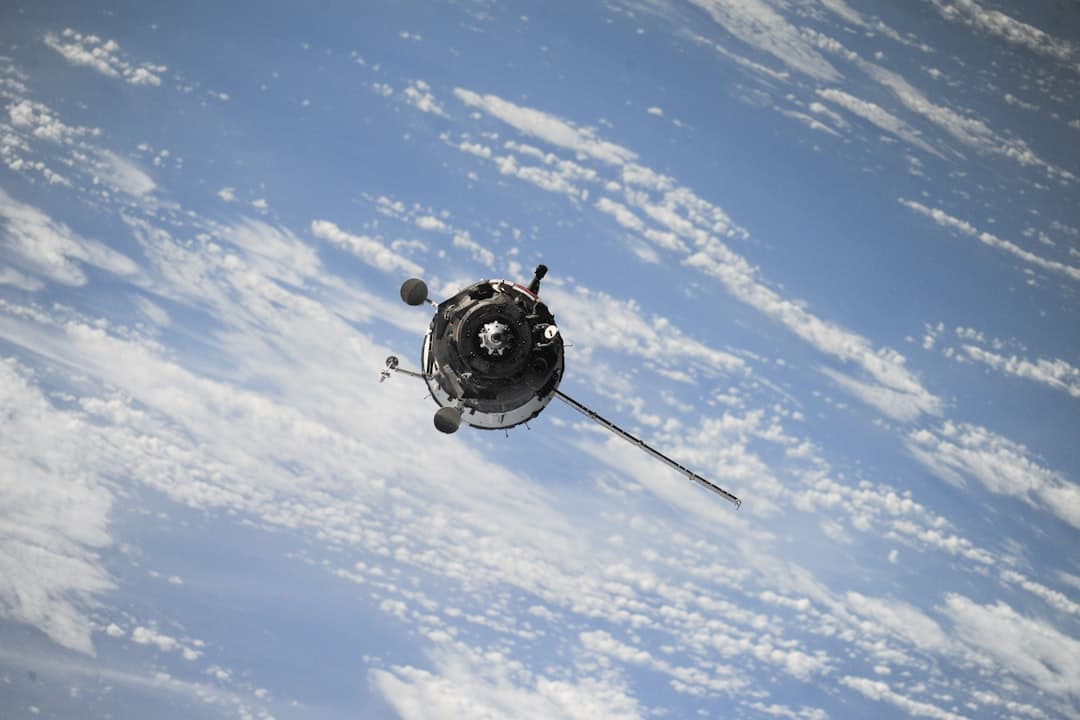
A newly formed nonprofit called the Fermi Explorer Mission says it plans to launch humanity's first spacecraft deliberately aimed at another star system - and it wants to do it by the end of 2029, for less than $15 million.
The target is Alpha Centauri, the sun's nearest stellar neighbor at roughly 4.4 light-years away. Because no propulsion technology exists that could get a spacecraft there quickly, the mission accepts an almost unimaginable timeline: the probe won't actually arrive for about 80,000 years, long after everyone involved in building it - and everyone alive today - is gone.
The project comes from Starcloud co-founders Philip Johnston, Adi Oltean, and Ezra Feilden, who set up the Redmond, Washington-based nonprofit specifically for this mission. Their self-imposed rules are strict: the spacecraft must be aimed at Alpha Centauri, carry at least one kilogram of payload, launch before the end of 2029, and cost under $15 million to design, build, launch, and operate - a fraction of what a typical interplanetary mission costs.
To hit that budget, the mission leans on an unusual trajectory. After deploying from its launch vehicle, the spacecraft would loop repeatedly around Earth and the sun, using a series of gravity-assisted "perihelion pumping" maneuvers to build up speed before finally breaking free toward interstellar space. The path was discovered not by a traditional orbital mechanics team, but by an AI system built by Physical Superintelligence (PSI), an AI physics research lab that emerged from stealth with $58 million in seed funding.
Whether the mission ever reaches its target obviously can't be verified by anyone now alive, and skeptics will note that an 80,000-year journey guarantees nothing about the spacecraft surviving interstellar dust, radiation, or simple hardware failure over such an extreme span. But the team's stated goal isn't really about the eventual arrival - it's about proving, cheaply and soon, that a small, low-cost spacecraft can be deliberately launched toward another star at all, something no mission has ever formally attempted.
Key facts
- Fermi Explorer Mission aims to launch by the end of 2029 for under $15 million
- Target is Alpha Centauri, about 4.4 light-years away
- The journey itself is expected to take roughly 80,000 years
- Trajectory was plotted by an AI system from Physical Superintelligence (PSI)
Related articles

Science ·
Astronomers Capture Clearest-Ever Image of Betelgeuse's Long-Suspected Companion Star
An international team using the European Southern Observatory's Very Large Telescope has produced the sharpest image yet of a faint companion star orbiting Betelgeuse, closing in on a mystery astronomers have debated for nearly a century.

Technology ·
Wix Launches 'Symphony,' a Standalone Multi-Agent AI Platform for Small Businesses
Wix has launched Symphony, a standalone multi-agent AI system designed to run marketing, customer service and operational tasks for small and medium-sized businesses, extending its ambitions well beyond website building.

Business ·
Nvidia in Talks to Buy AI Platform Hugging Face for $12.9 Billion
Nvidia is reportedly nearing a deal to acquire Hugging Face, the widely used open-source AI model repository, for $12.9 billion, in what would be the chipmaker's largest acquisition ever.

Technology ·
Hope and Concern Swirls for Ohioans Around 'World's Largest Datacenter'
A massive $500bn artificial intelligence datacenter project in Piketon, Ohio, backed by OpenAI, Nvidia, and Japanese investors, has sparked both economic hope for thousands of jobs and environmental concerns.

World ·
Fake US Thinktank Funded by Israel Used AI Optimization for Propaganda
A Guardian analysis reveals that a pro-Israel messaging website using the name of a non-existent US thinktank published over 560,000 words across 124 reports in nine days using a commercial platform designed to make AI chatbots cite its content.
Comments
Loading comments...