 Newsverz
Science ·
Hubble découvre un mystérieux motif météorologique à dix côtés au pôle sud de Saturne
Des astronomes utilisant le télescope spatial Hubble ont identifié un immense motif atmosphérique à dix côtés entourant le pôle sud de Saturne, large d'environ 168 000 kilomètres, marquant le premier grand courant-jet polygonal observé dans l'hémisphère sud de la planète.
Synthétisé par IA à partir des sources citées ci-dessous.
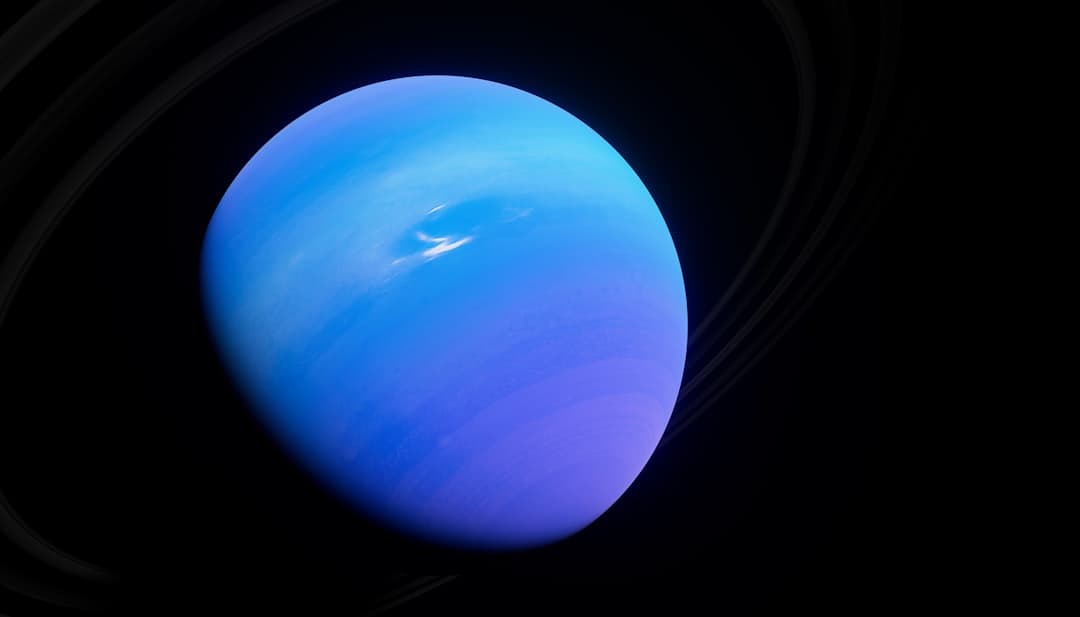
Des astronomes utilisant le télescope spatial Hubble ont découvert une immense caractéristique atmosphérique à dix côtés entourant le pôle sud de Saturne, s'étendant sur environ 168 000 kilomètres, soit environ 16 780 kilomètres par côté, selon des résultats publiés dans la revue Science Advances. Il s'agit du premier grand motif de courant-jet en forme de polygone observé dans l'hémisphère sud de Saturne, une contrepartie frappante du célèbre courant-jet hexagonal qui entoure le pôle nord de la planète depuis des décennies.
Les chercheurs ont indiqué que le décagone semble avoir commencé à émerger progressivement au cours des dernières années, sur la base d'un examen des observations de Hubble remontant à 2023. Les scientifiques pensent que ces motifs atmosphériques polygonaux se forment à partir d'interactions complexes entre des courants-jets se déplaçant rapidement à différentes latitudes, bien que la dynamique sous-jacente qui détermine le nombre exact de côtés reste un domaine d'étude actif. Cette découverte s'ajoute à une image de plus en plus riche de l'atmosphère de Saturne, l'une des plus dynamiques et géométriquement inhabituelles du système solaire.
Key facts
- Hubble discovered a ten-sided atmospheric pattern circling Saturn's south pole, about 104,250 miles across
- It is the first large polygon-shaped jet stream observed in Saturn's southern hemisphere
- It is a counterpart to Saturn's well-known hexagonal jet stream at the north pole
- The pattern appears to have gradually emerged over the past several years, based on Hubble data since 2023
- Findings were published in the journal Science Advances
Related articles

Science ·
NASA's Roman Space Telescope Launches Toward Deep Space Survey Mission
NASA's Nancy Grace Roman Space Telescope launched from Kennedy Space Center on a SpaceX Falcon Heavy rocket, beginning a roughly month-long journey to a gravitationally stable point beyond Earth's orbit where it will survey the cosmos roughly a thousand times faster than the Hubble Space Telescope.

Science ·
Scientists Discover Hidden Heat Anomaly Deep Beneath Mars's Southern Hemisphere
A new study using gravity measurements reveals that the interior beneath Mars's southern hemisphere may be 200 to 400 degrees Celsius hotter than the north and partially molten, offering clues to the planet's magnetism and geologic history.

Science ·
Nonprofit Plans 80,000-Year Mission to Alpha Centauri - for Under $15 Million
A Redmond-based nonprofit wants to launch the first spacecraft deliberately aimed at another star system by 2029, using an AI-plotted trajectory and a budget smaller than many single satellites.

Science ·
NASA's Roman Space Telescope Launches on Falcon Heavy Toward Deep Space Survey Mission
NASA's Nancy Grace Roman Space Telescope lifted off successfully aboard a SpaceX Falcon Heavy rocket, beginning a mission to survey billions of galaxies and search for exoplanets from a vantage point a million miles from Earth.

Science ·
Astronomers Capture Clearest-Ever Image of Betelgeuse's Long-Suspected Companion Star
An international team using the European Southern Observatory's Very Large Telescope has produced the sharpest image yet of a faint companion star orbiting Betelgeuse, closing in on a mystery astronomers have debated for nearly a century.
Comments
Loading comments...