 Newsverz
Science ·
El Hubble descubre un misterioso patrón climático de diez lados en el polo sur de Saturno
Astrónomos que utilizan el telescopio espacial Hubble han identificado un enorme patrón atmosférico de diez lados que rodea el polo sur de Saturno, de aproximadamente 168.000 kilómetros de ancho, marcando la primera corriente en chorro de forma poligonal grande observada en el hemisferio sur del planeta.
Sintetizado por IA a partir de las fuentes citadas a continuación.
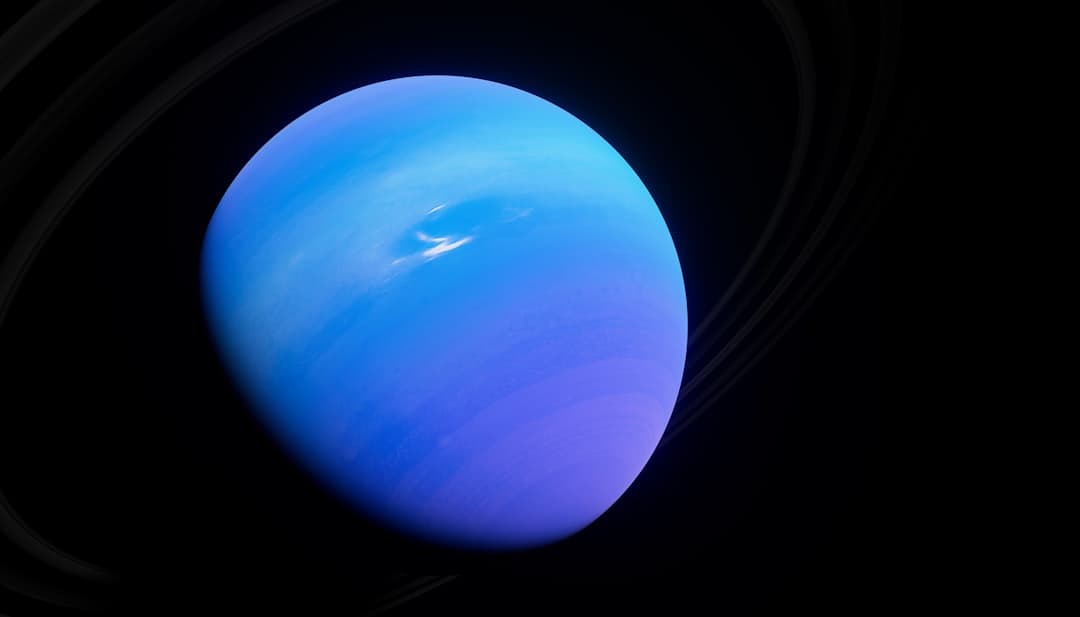
Astrónomos que utilizan el telescopio espacial Hubble han descubierto una enorme característica atmosférica de diez lados que rodea el polo sur de Saturno, que abarca aproximadamente 168.000 kilómetros de ancho, o unos 16.780 kilómetros por lado, según hallazgos publicados en la revista Science Advances. Marca el primer patrón de corriente en chorro con forma de polígono grande observado en el hemisferio sur de Saturno, una contraparte llamativa de la famosa corriente en chorro hexagonal que ha rodeado el polo norte del planeta durante décadas.
Los investigadores dijeron que el decágono parece haber comenzado a surgir gradualmente durante los últimos años, según una revisión de observaciones del Hubble que se remontan a 2023. Los científicos creen que estos patrones atmosféricos poligonales se forman a partir de interacciones complejas entre corrientes en chorro de movimiento rápido en diferentes latitudes, aunque la dinámica subyacente que determina el número exacto de lados sigue siendo un área activa de estudio. El descubrimiento se suma a una imagen cada vez mayor de la atmósfera de Saturno como una de las más dinámicas y geométricamente inusuales del sistema solar.
Key facts
- Hubble discovered a ten-sided atmospheric pattern circling Saturn's south pole, about 104,250 miles across
- It is the first large polygon-shaped jet stream observed in Saturn's southern hemisphere
- It is a counterpart to Saturn's well-known hexagonal jet stream at the north pole
- The pattern appears to have gradually emerged over the past several years, based on Hubble data since 2023
- Findings were published in the journal Science Advances
Related articles

Science ·
NASA's Roman Space Telescope Launches Toward Deep Space Survey Mission
NASA's Nancy Grace Roman Space Telescope launched from Kennedy Space Center on a SpaceX Falcon Heavy rocket, beginning a roughly month-long journey to a gravitationally stable point beyond Earth's orbit where it will survey the cosmos roughly a thousand times faster than the Hubble Space Telescope.

Science ·
Scientists Discover Hidden Heat Anomaly Deep Beneath Mars's Southern Hemisphere
A new study using gravity measurements reveals that the interior beneath Mars's southern hemisphere may be 200 to 400 degrees Celsius hotter than the north and partially molten, offering clues to the planet's magnetism and geologic history.

Science ·
Nonprofit Plans 80,000-Year Mission to Alpha Centauri - for Under $15 Million
A Redmond-based nonprofit wants to launch the first spacecraft deliberately aimed at another star system by 2029, using an AI-plotted trajectory and a budget smaller than many single satellites.

Science ·
NASA's Roman Space Telescope Launches on Falcon Heavy Toward Deep Space Survey Mission
NASA's Nancy Grace Roman Space Telescope lifted off successfully aboard a SpaceX Falcon Heavy rocket, beginning a mission to survey billions of galaxies and search for exoplanets from a vantage point a million miles from Earth.

Science ·
Astronomers Capture Clearest-Ever Image of Betelgeuse's Long-Suspected Companion Star
An international team using the European Southern Observatory's Very Large Telescope has produced the sharpest image yet of a faint companion star orbiting Betelgeuse, closing in on a mystery astronomers have debated for nearly a century.
Comments
Loading comments...