 Newsverz
Science ·
Hubble entdeckt rätselhaftes zehnseitiges Wettermuster am Südpol des Saturn
Astronomen haben mithilfe des Hubble-Weltraumteleskops ein massives zehnseitiges atmosphärisches Muster identifiziert, das den Südpol des Saturn umkreist und etwa 168.000 Kilometer breit ist – der erste große polygonförmige Jetstream, der in der südlichen Hemisphäre des Planeten beobachtet wurde.
KI-synthetisiert aus den unten genannten Quellen.
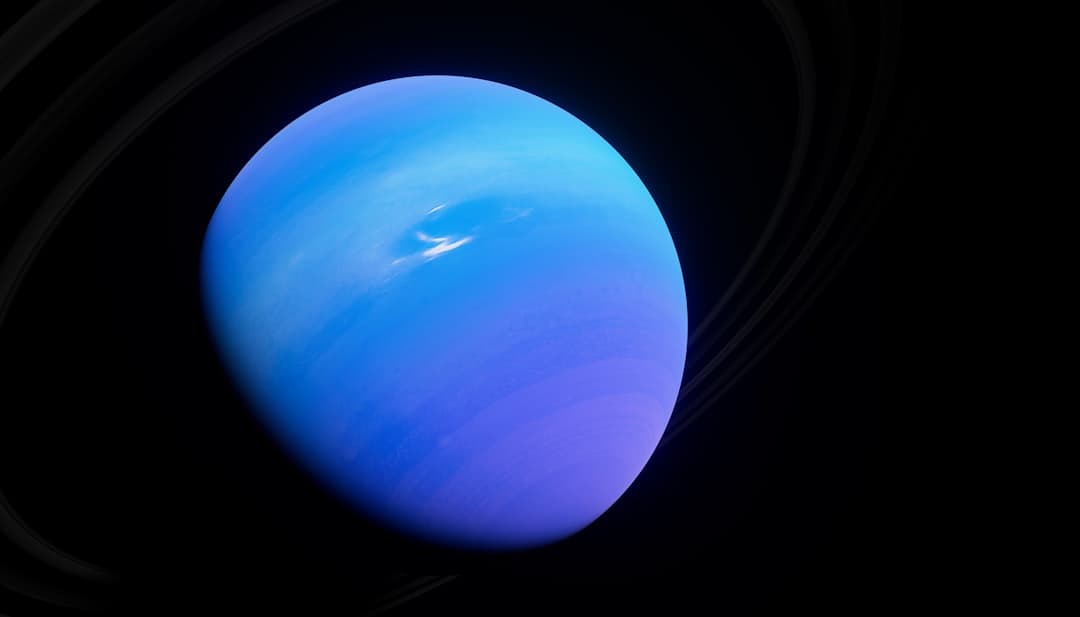
Astronomen haben mithilfe des Hubble-Weltraumteleskops ein massives zehnseitiges atmosphärisches Merkmal entdeckt, das den Südpol des Saturn umgibt und sich über etwa 168.000 Kilometer erstreckt, also etwa 16.780 Kilometer pro Seite, wie aus in der Fachzeitschrift Science Advances veröffentlichten Ergebnissen hervorgeht. Es ist das erste große polygonförmige Jetstream-Muster, das in der südlichen Hemisphäre des Saturn beobachtet wurde – ein bemerkenswertes Gegenstück zu dem berühmten sechseckigen Jetstream, der seit Jahrzehnten den Nordpol des Planeten umkreist.
Die Forscher sagten, dass das Zehneck offenbar in den vergangenen Jahren allmählich entstanden ist, basierend auf einer Überprüfung von Hubble-Beobachtungen, die bis ins Jahr 2023 zurückreichen. Wissenschaftler gehen davon aus, dass sich diese polygonalen atmosphärischen Muster aus komplexen Wechselwirkungen zwischen sich schnell bewegenden Jetstreams auf unterschiedlichen Breitengraden bilden, wobei die zugrunde liegende Dynamik, die die genaue Anzahl der Seiten bestimmt, weiterhin ein aktives Forschungsgebiet bleibt. Die Entdeckung erweitert das wachsende Bild der Saturnatmosphäre als eine der dynamischsten und geometrisch ungewöhnlichsten im Sonnensystem.
Key facts
- Hubble discovered a ten-sided atmospheric pattern circling Saturn's south pole, about 104,250 miles across
- It is the first large polygon-shaped jet stream observed in Saturn's southern hemisphere
- It is a counterpart to Saturn's well-known hexagonal jet stream at the north pole
- The pattern appears to have gradually emerged over the past several years, based on Hubble data since 2023
- Findings were published in the journal Science Advances
Related articles
Science ·
NASA's Roman Space Telescope Launches Toward Deep Space Survey Mission
NASA's Nancy Grace Roman Space Telescope launched from Kennedy Space Center on a SpaceX Falcon Heavy rocket, beginning a roughly month-long journey to a gravitationally stable point beyond Earth's orbit where it will survey the cosmos roughly a thousand times faster than the Hubble Space Telescope.

Science ·
Scientists Discover Hidden Heat Anomaly Deep Beneath Mars's Southern Hemisphere
A new study using gravity measurements reveals that the interior beneath Mars's southern hemisphere may be 200 to 400 degrees Celsius hotter than the north and partially molten, offering clues to the planet's magnetism and geologic history.
Science ·
Nonprofit Plans 80,000-Year Mission to Alpha Centauri - for Under $15 Million
A Redmond-based nonprofit wants to launch the first spacecraft deliberately aimed at another star system by 2029, using an AI-plotted trajectory and a budget smaller than many single satellites.

Science ·
NASA's Roman Space Telescope Launches on Falcon Heavy Toward Deep Space Survey Mission
NASA's Nancy Grace Roman Space Telescope lifted off successfully aboard a SpaceX Falcon Heavy rocket, beginning a mission to survey billions of galaxies and search for exoplanets from a vantage point a million miles from Earth.

Science ·
Astronomers Capture Clearest-Ever Image of Betelgeuse's Long-Suspected Companion Star
An international team using the European Southern Observatory's Very Large Telescope has produced the sharpest image yet of a faint companion star orbiting Betelgeuse, closing in on a mystery astronomers have debated for nearly a century.
Comments
Loading comments...