 Newsverz
Science ·
1.4-Million-Year-Old Footprints Reveal a Surprisingly Large, Social Human Relative
Fossil tracks in Kenya show eight Paranthropus boisei individuals - mostly adult males, standing up to 1.8 meters tall - walking together along a lakeshore, hinting at complex group behavior.
AI-synthesized from the cited sources below.
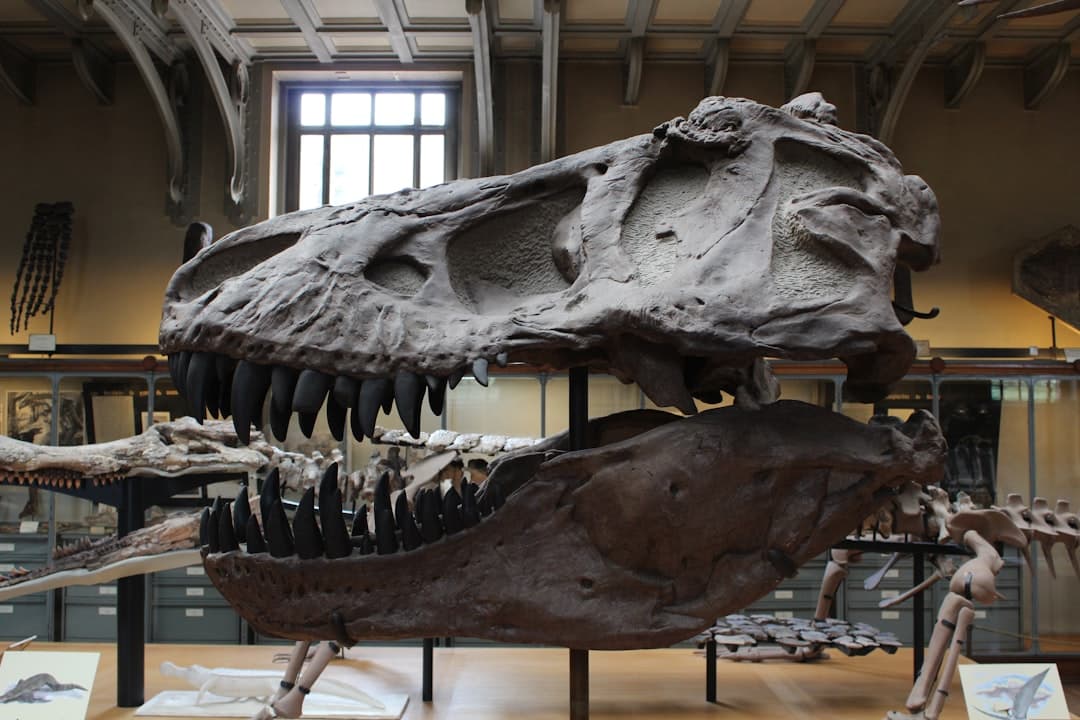
A set of fossil footprints preserved in Kenya for 1.4 million years is rewriting what scientists thought they knew about one of humanity's ancient relatives - both how big it was, and how it lived.
The tracks were uncovered in the Koobi Fora Formation near Lake Turkana and date to roughly 1.43 million years ago. They capture a single moment frozen in time: at least eight individuals of Paranthropus boisei, an extinct hominin species known for its massive jaw and teeth, walking together across wet ground moments before the surface hardened and locked their footprints in place.
The most striking finding is size. Based on the depth and spacing of the prints, researchers estimate some individuals stood up to 1.8 meters tall and weighed around 75 kilograms - dramatically larger than earlier estimates, which were based on a handful of rare fossil bones and had pegged the species as considerably smaller and more ape-like in stature.
Just as significant is what the footprints reveal about behavior. The group appears to have been made up mostly of adult males traveling together, with no clear evidence of females or juveniles in the tracks. "The fact that eight, mostly adult male, P. boisei individuals seemingly traveled together as a group, without females or children, hints at a complex social structure in this species," said Neil Roach, a researcher at Harvard University involved in the study.
Fossil bones can tell scientists a lot about anatomy, but they rarely reveal behavior - footprints are one of the few kinds of evidence that capture a moment of actual activity, rather than just physical remains. The research, published in Proceedings of the National Academy of Sciences and led by teams from Chatham University and the Max Planck Institute for Evolutionary Anthropology, adds Paranthropus boisei to a short list of ancient hominin species where fossilized "behavior" - not just bones - has actually survived to be studied.
Key facts
- Footprints in Kenya's Koobi Fora Formation date to about 1.43 million years ago
- At least eight Paranthropus boisei individuals walked together
- Some individuals stood up to 1.8 meters tall and weighed about 75 kilograms
- The group appears to have been mostly adult males, hinting at complex social structure
Related articles
Science ·
Archaeologists Unearth 11,000-Year-Old Statue of a Person Riding a Leopard in Turkey
Excavators at the Neolithic site of Karahantepe in southeastern Türkiye have uncovered a 70-centimeter stone statue of a human figure seated on a leopard, described by archaeologists as unlike anything previously found from the period.

Science ·
Scientists Find How High Blood Sugar Helps Cancer Cells Hide From the Immune System
A new study shows cancer cells build a thick sugary shield around themselves to evade immune attack - and that high blood sugar makes that shield even stronger.

Science ·
Nonprofit Plans 80,000-Year Mission to Alpha Centauri - for Under $15 Million
A Redmond-based nonprofit wants to launch the first spacecraft deliberately aimed at another star system by 2029, using an AI-plotted trajectory and a budget smaller than many single satellites.

Science ·
How Tumors Hide From Your Immune System - And How Scientists Are Fighting Back
Your immune system is built to hunt down abnormal cells, including cancer - so why doesn't it always work? Here's how tumors evade detection, and how a new generation of treatments is exposing them.

Science ·
El Niño Events Now Strongest in 1,000 Years as Climate Change Supercharges the Pacific Ocean Pattern
A study analyzing 1,000 years of Galápagos coral records found that El Niño events over the past 40 years have been nearly 40% stronger than at any point since before industrialization, providing some of the clearest evidence yet linking climate change to the intensifying pattern.
Comments
Loading comments...